
Many people treat DMA as synonymous with "the most stable," but it actually solves only one problem: keeping the cheat program off the computer running the game. This does bypass a lot of process-scanning-based detection, but it can't make your crosshair movement look human, nor can it stop anti-cheat from identifying hardware from the PCIe bus side. Understanding this boundary explains why a well-built pure software cheat can also run stably on a single machine long-term.
How DMA Works
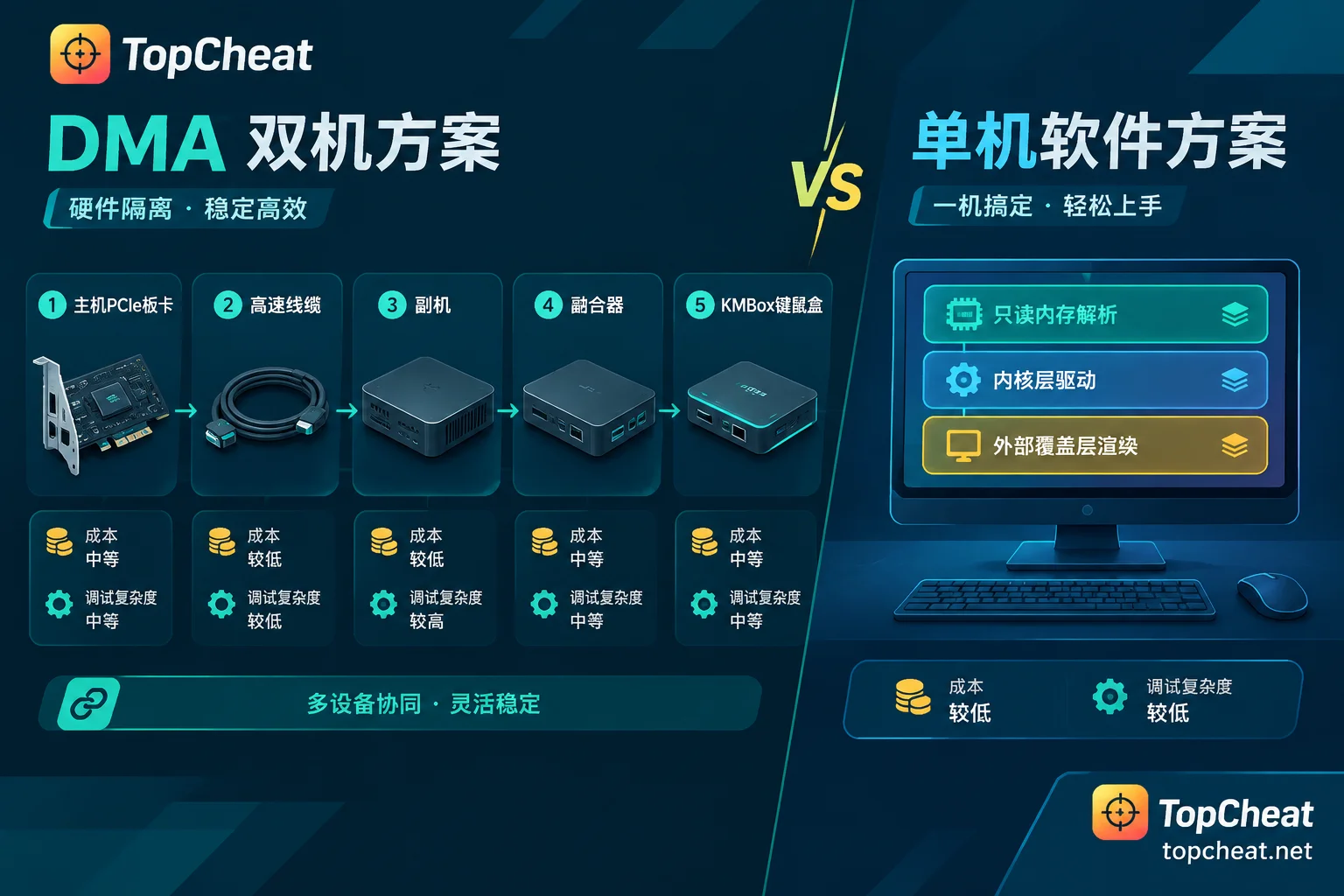
DMA stands for Direct Memory Access. A typical hardware setup looks like this:
- Insert an FPGA-based PCIe card into the gaming PC;
- This card bypasses the operating system and CPU scheduling to physically read game data directly from motherboard memory;
- Data travels via high-speed cable to a second PC, where ESP calculations, ESP drawing, and radar interface all run;
- The image is then presented through a screen fuser or simply a second monitor;
- For aim assist and recoil control to work, you also need a hardware keyboard/mouse box like KMBox to feed mouse commands from the second PC back to the main PC.
The result: no cheat process, no cheat files, and no writes to game memory on the gaming PC. Traditional anti-cheat scanning application layers and system processes finds nothing. This is DMA's real value—and why it's been mythologized.
Three Things DMA Can't Stop
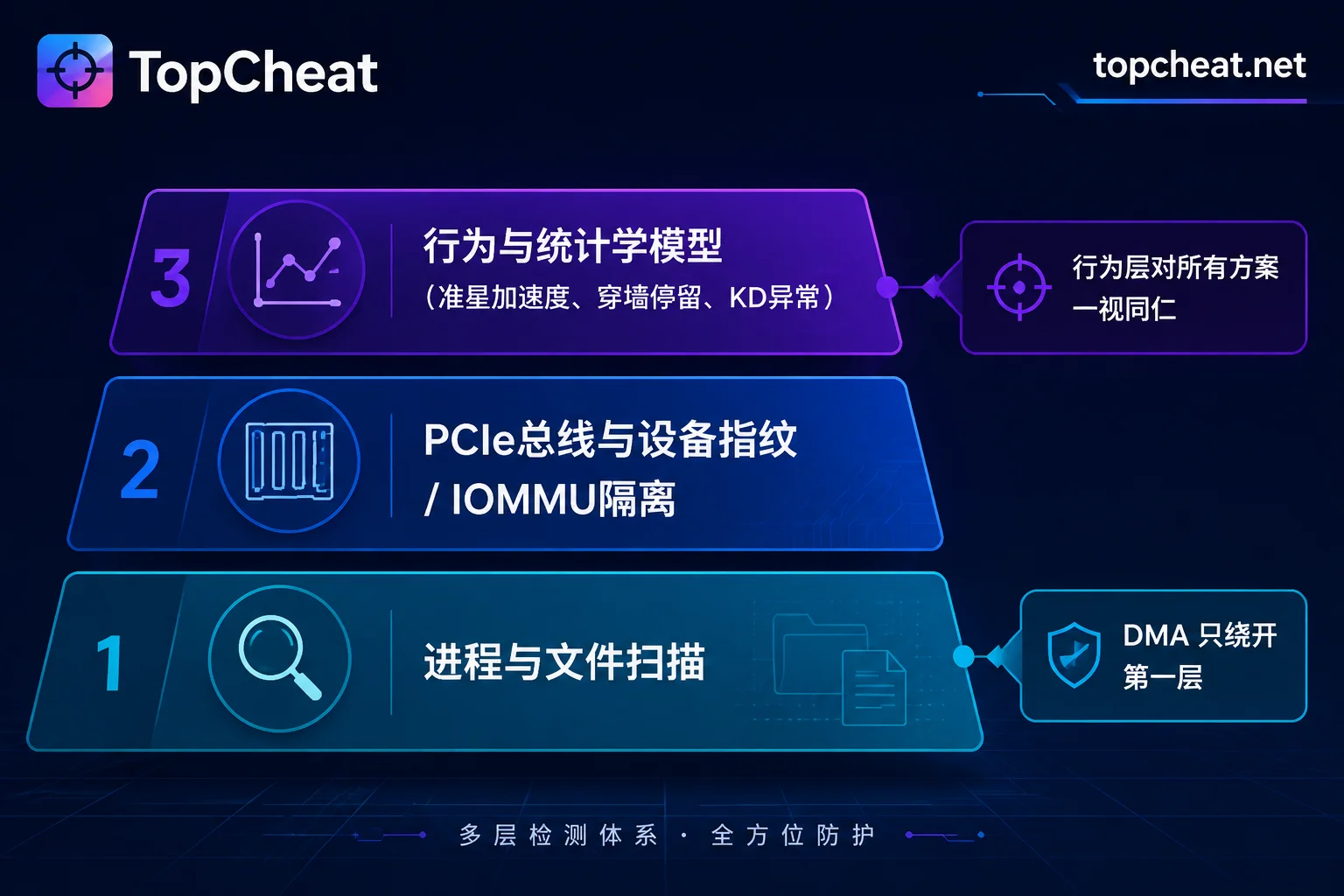
First, the PCIe path itself is already targeted.
Modern anti-cheat has long pushed the battle to the hardware bus layer. Enumerating PCIe device IDs, verifying configuration space register fingerprints, and analyzing device response timing characteristics can directly identify cards that "don't look like legitimate peripherals." Especially with cards using reference firmware—once firmware signatures are extracted, it's batch hardware-level bans, not just individual accounts.
Second, system-level protections are closing the door.
Motherboard-level IOMMU (Intel calls it VT-d, AMD calls it AMD-Vi) combined with Windows' Pre-Boot kernel DMA protection adds an address translation isolation layer for device memory access. Unauthorized PCIe devices trying to read arbitrary physical addresses are either isolated or trigger Page Faults. There are public reports that Riot's Vanguard uses IOMMU in updates to block DMA hardware access paths. Specific blacklists and signature rules of various anti-cheats are not public, but the trend is clear: this path will only get narrower, not wider.
Third, behavioral layer treats all cheats equally.
This is the most easily overlooked point. Servers and anti-cheat continuously collect operational data—kill curves, crosshair acceleration, time spent looking at walls, statistical KD anomalies. Which machine your cheat runs on has zero impact on this data. Locking on too cleanly, tracking through walls, or recoil patterns mechanical as a script—VAC Live and ACE's AI behavioral models will flag you; even if models miss it, repeated reports from in-game players will trigger manual review.
In other words, DMA buys "process concealment," not "behavioral safety." Many who spent big on DMA and still got caught had problems at the third layer, not the first.
What Pure Software Solutions Rely On for Stability
"No DMA needed" doesn't mean returning to crude DLL injection from early years. Serious single-machine software solutions today are completely different from a decade ago in several key aspects:
Read-only memory parsing, no writes. The cheat only parses coordinates, states, items, and other data from game memory—it doesn't write to or modify code in protected memory regions. Memory integrity checks catch people because something was changed; change nothing, and this type of check has no trigger point. ESP, radar, and loot filtering are essentially information functions, naturally suited to pure read implementations.
Kernel-level (Ring 0) driver protection. Communication goes through kernel drivers instead of user-mode injection, combined with dynamic cleanup of driver objects and elimination of handle enumeration signatures, so routine handle scans and module enumeration find no clues.
External independent overlay rendering. ESP and radar are drawn on an independent layer outside the game process, without hooking the game's rendering pipeline. Combined with screen capture bypass processing, the game itself, anti-cheat screenshots, and live streams get clean images. This is especially practical for those who stream often or are asked to record.
Humanized aim assist algorithms. Adjustable smoothing, crosshair trajectories with micro-jitter and acceleration curves, magnetic attraction instead of instant lock-on—the goal is to reduce the behavioral layer signatures mentioned earlier. This is where software solutions compete fairly with DMA—DMA's KMBox also has to solve this, and whoever does it more carefully has cleaner behavioral data.
Independent distribution and obfuscated compilation. Generic signature libraries are dangerous because thousands run the same binary; once reverse-engineered, it's a total exposure. Obfuscation and differentiated compilation during distribution significantly reduce this collective exposure probability.
So Which Should I Choose?
Here are some practical criteria:
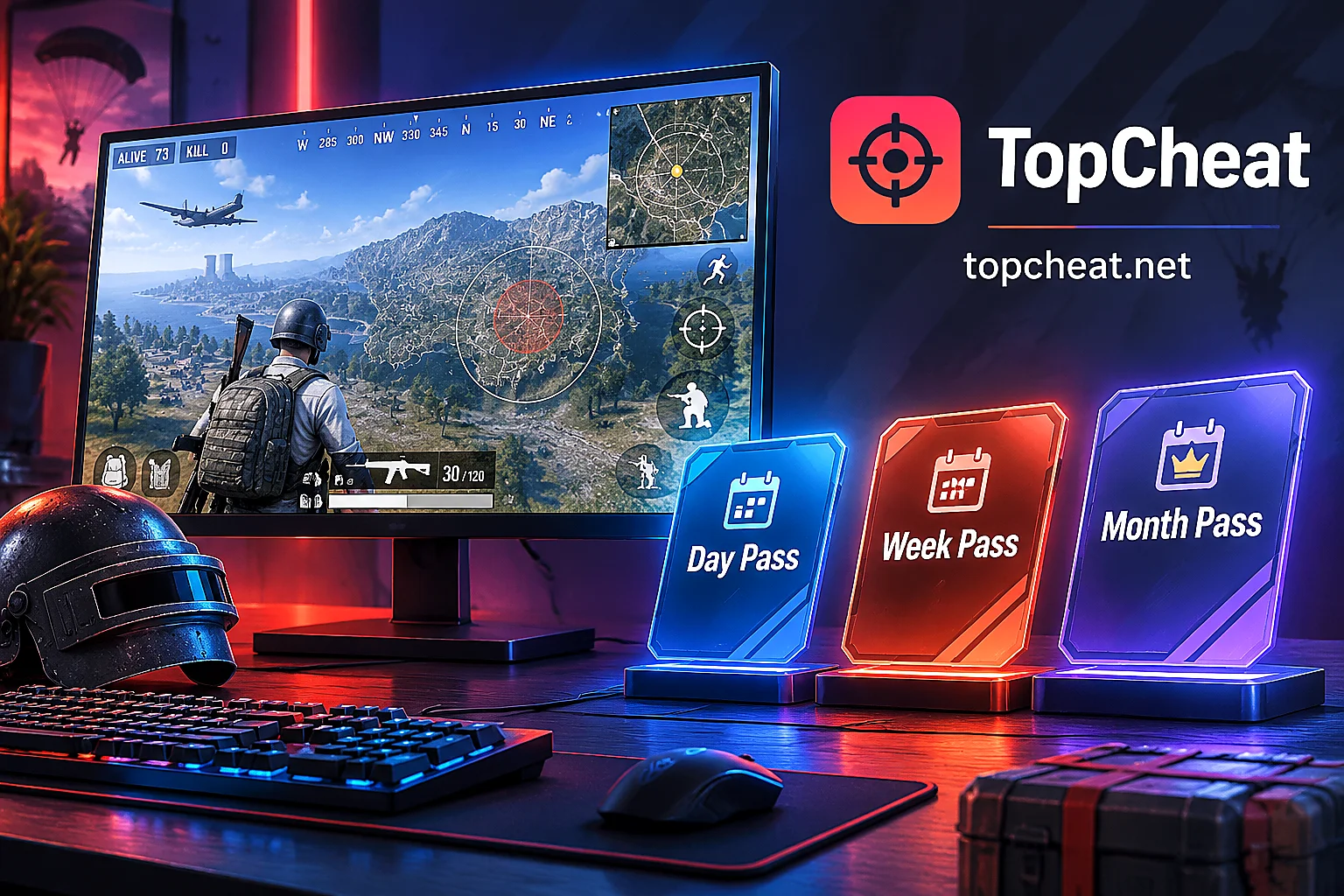
- Budget and willingness to tinker. A full DMA setup requires a second PC, PCIe card, fuser, KMBox, plus firmware flashing, driver tuning, and timing issues. Complete setup plus debugging time costs several thousand yuan upward; pure software solutions install on one PC and work, purchased by day, week, or month pass—trial-and-error costs are on a completely different scale.
- Motherboard and BIOS environment. If your platform has kernel DMA protection or IOMMU-related options enabled by default, DMA usability itself is questionable, and disabling these options introduces new risks.
- Type of feature needed. Pure information features (ESP, radar, loot value filtering, extraction point markers) only need memory reading, where software solutions are not at a disadvantage; what truly needs hardware isolation is write-type modifications, and these features are inherently higher risk in mainstream competitive games.
- Your usage habits. If you plan to go all out, lock heads, and push KD daily, no solution will last long. Conversely, with restrained use, software solution stability is sufficient for most players.
Comparing with TopCheat's Products
TopCheat takes a single-machine pure software approach across all games—no second PC, no card insertion or firmware flashing. Based on current public features on official product pages, the focus is essentially on the "read-only information + humanized aim assist" line mentioned above:
- CS2 cheat offers skeletal ESP, silent aim, radar, and local skin modification. Skins are displayed locally, don't enter inventory or trade; the product page distinguishes official matchmaking/Premier from third-party platforms—FACEIT, 5E and similar platforms' compatibility must be checked separately on the page and cannot be assumed. For selection details, see this CS2 cheat selection guide.
- Delta Force cheat includes player ESP, loot value filtering, aim assist, and machine code protection. The needs for Hazard Operations and All-Out Warfare differ greatly; supported scope is subject to the corresponding mode description.
- Valorant cheat includes box ESP, humanized aim assist, recoil control, and screen capture bypass—Valorant has the most aggressive anti-cheat, making humanization and screen capture bypass most visibly necessary.
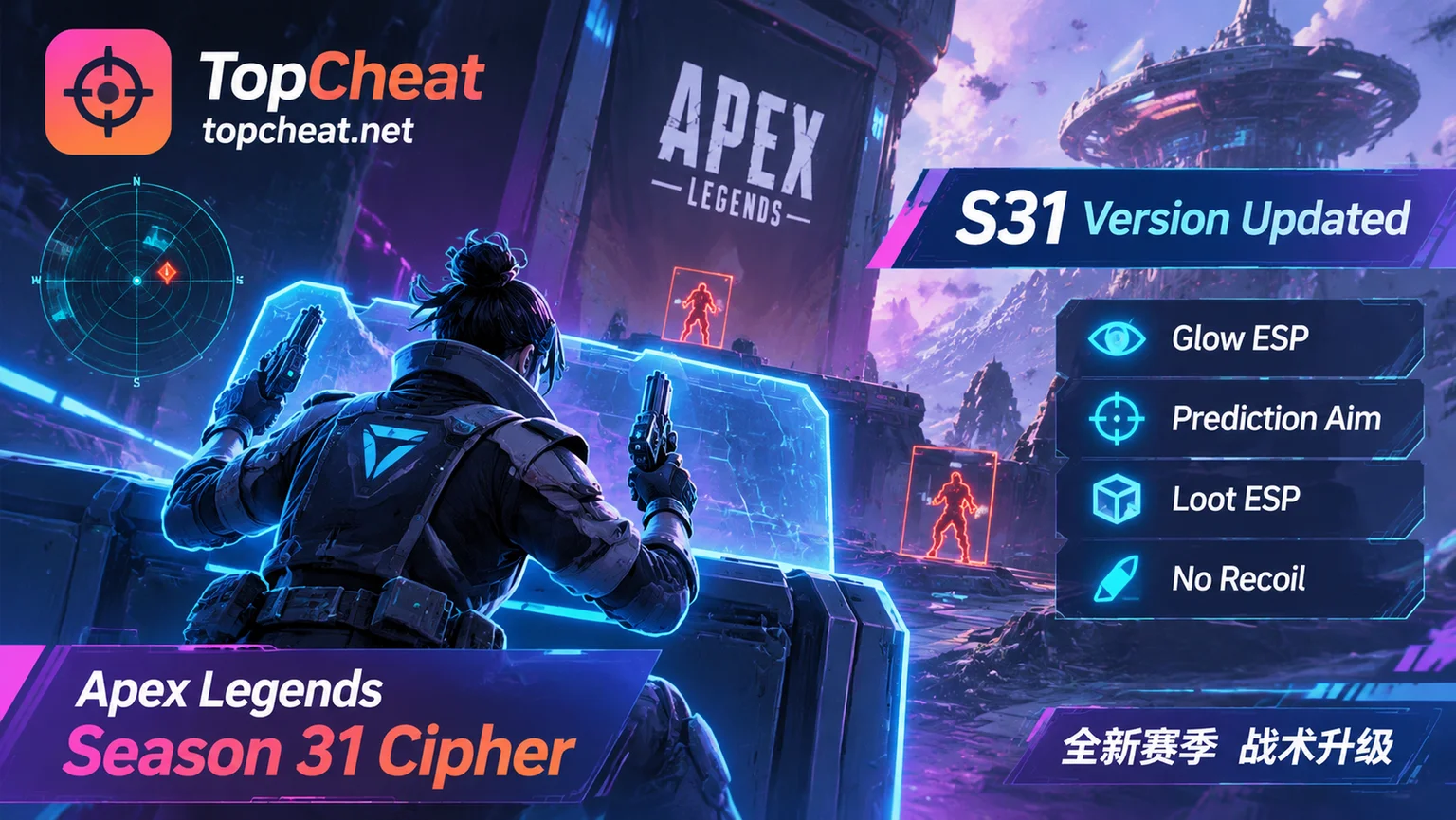
- PUBG cheat offers player/vehicle/loot ESP, magnetic aim assist, and radar; Apex cheat offers glow ESP, predictive aim assist, loot ESP, and no recoil.
Other games' module combinations, supported modes, device binding and unbinding conditions, and current maintenance or testing status vary. Before buying, it's easiest to find the corresponding page in the game catalog and check.
To be clear: no technical route can promise never being detected—not DMA, not pure software. The difference lies in cost structure and failure modes. DMA invests money and time in bypassing process-level scans, but this layer's advantage is being continuously weakened by IOMMU and PCIe fingerprinting; pure software solutions focus on read-only reading, kernel-level concealment, and behavioral humanization, at much lower cost, and happen to cover where current detection focus truly lies. For the vast majority who just want to play normally, the latter is the more suitable value choice.


Comments(0)