
Let's Make the Answer Clear First
A prediction aimbot (also called a lead aimbot) doesn't pull the crosshair onto the enemy—it pulls it to where the enemy will be when the bullet arrives. In Apex this isn't a bonus feature; it's a prerequisite for hitting at mid-to-long range, because almost none of the game's guns hit exactly where you point.
If you've used an aimbot that works fine in other shooters and then tried it in Apex, only to find it "locks on perfectly but deals zero damage," the problem usually isn't lock-on accuracy—it's that the algorithm itself doesn't calculate bullet travel time.
Apex Bullets Fly and Drop
Most players' intuition comes from hitscan games like CS2 or Valorant: the hit is determined the instant you fire, the crosshair lands where you aim, and there's no travel time.
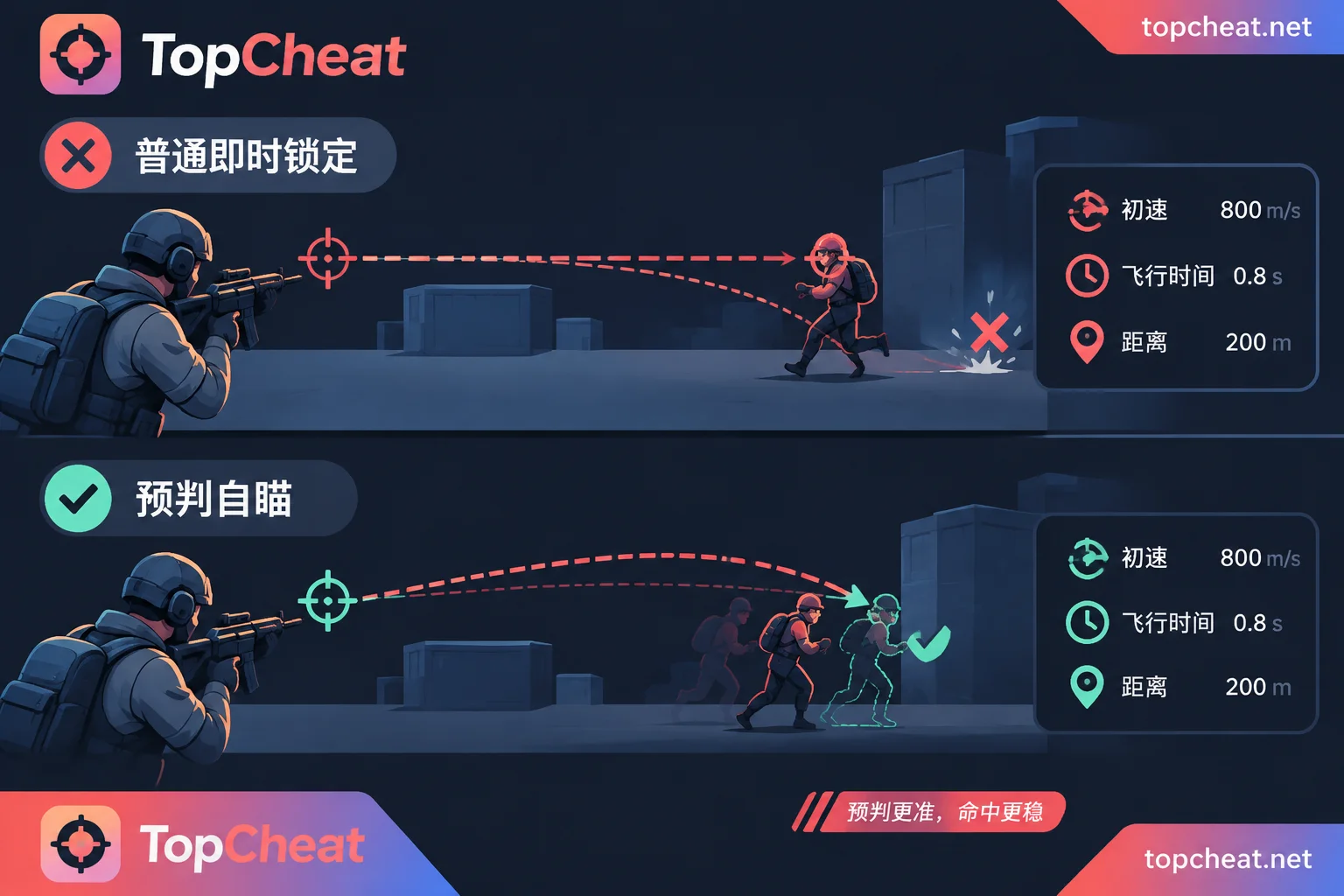
Apex isn't like that. Except for a few mechanics like the Charge Rifle, the vast majority of Apex weapons use projectile ballistics: each gun has its own muzzle velocity and travel time, and bullets drop due to gravity during flight.
The direct consequence is that the farther the distance, the longer the gap between pulling the trigger and the bullet arriving. If the enemy is still moving during that time—strafing, sliding, jumping—the bullet will land behind them. An ordinary aimbot designed for hitscan locks onto the target's bone coordinates at that moment, so it will inevitably miss moving targets at mid-to-long range. This isn't a lock-on failure; it's the algorithm being used for the wrong game type.
Close range is the exception: within about a dozen meters, travel time is so short that the lead is negligible, and the difference between ordinary lock-on and prediction is minimal. The value of prediction is concentrated at mid-to-long range and against highly mobile targets.
What a Prediction Aimbot Actually Calculates
It needs three sets of data simultaneously:
- Weapon parameters—the muzzle velocity and drop coefficient of the currently held gun;
- Target movement—the enemy character's real-time movement speed and direction vector;
- The straight-line distance between the two.
Using these three sets of data, it calculates the future coordinates where the bullet and target will collide, then guides the crosshair or trajectory correction to that lead position.
Here's an easily overlooked point: different weapons have noticeably different muzzle velocities, so at the same distance and against the same strafing target, the lead differs from gun to gun. A competent prediction must therefore be bound to the currently held weapon, not a fixed angular offset. This is also why after switching guns it often feels "suddenly inaccurate"—it's usually a parameter-matching issue, not something mystical.
When Prediction Miscalculates
Linear extrapolation assumes the target maintains its current speed and direction during the bullet's flight time. But Apex is one of the shooters with the most elaborate movement.
The following are all sudden acceleration changes that linear extrapolation can't keep up with, causing dynamic deviations in the impact point:
- Air strafes with sudden stops and turns, repeatedly changing direction;
- Consecutive movement tech like slide jumps and wall jumps;
- Instant displacement from character abilities like grapple or portal;
- Suddenly going from sprinting to completely stationary behind cover.
This means two things. First, don't expect prediction to reliably output damage in point-blank brawls—its home turf is mid-to-long range duels and chases. Second, any claim that prediction is "guaranteed to hit" doesn't hold up. TopCheat's product page merely lists the feature; it doesn't disclose specific fitting and compensation parameters for non-linear movement like super glides, so don't build expectations around imagined effects before buying.
Tuning: Three Settings That Really Affect Feel

Aimbot features generally need the following adjustments; the actual adjustable ranges depend on the interface of the product you use:
Field of View (FOV) determines the angular range within which targets are taken over. Set it large, and in chaotic fights you'll easily lose your target to someone passing by, and you're more likely to make large, unnatural flicks. Set it smaller, and it's closer to "find targets yourself, assist with correction"—usually more practical in Apex, where third-party fights are frequent.
Smoothing controls crosshair movement speed. Lower values approach instant snapping; higher values feel more like manual tracking. Prediction itself adds a lateral offset, so if smoothing is too low, that offset manifests as an abrupt flick that looks even more obvious than an ordinary aimbot.
Target bone trade-offs differ in Apex from hitscan games. At long range, lead error and bullet drop error stack, and the margin for error when locking the chest is generally larger than locking the head; at close range, travel time is short, so head locking becomes consistently rewarding. Setting them separately by engagement distance is more sensible than one set of parameters for everything.
Another easily missed point: prediction solves "where to shoot," while recoil determines where the muzzle goes during sustained fire. In mid-to-long-range automatic fire, the two errors stack, so prediction and no-recoil usually need to be considered together; enabling only one often shows no visible effect.
What Each TopCheat Apex Module Does
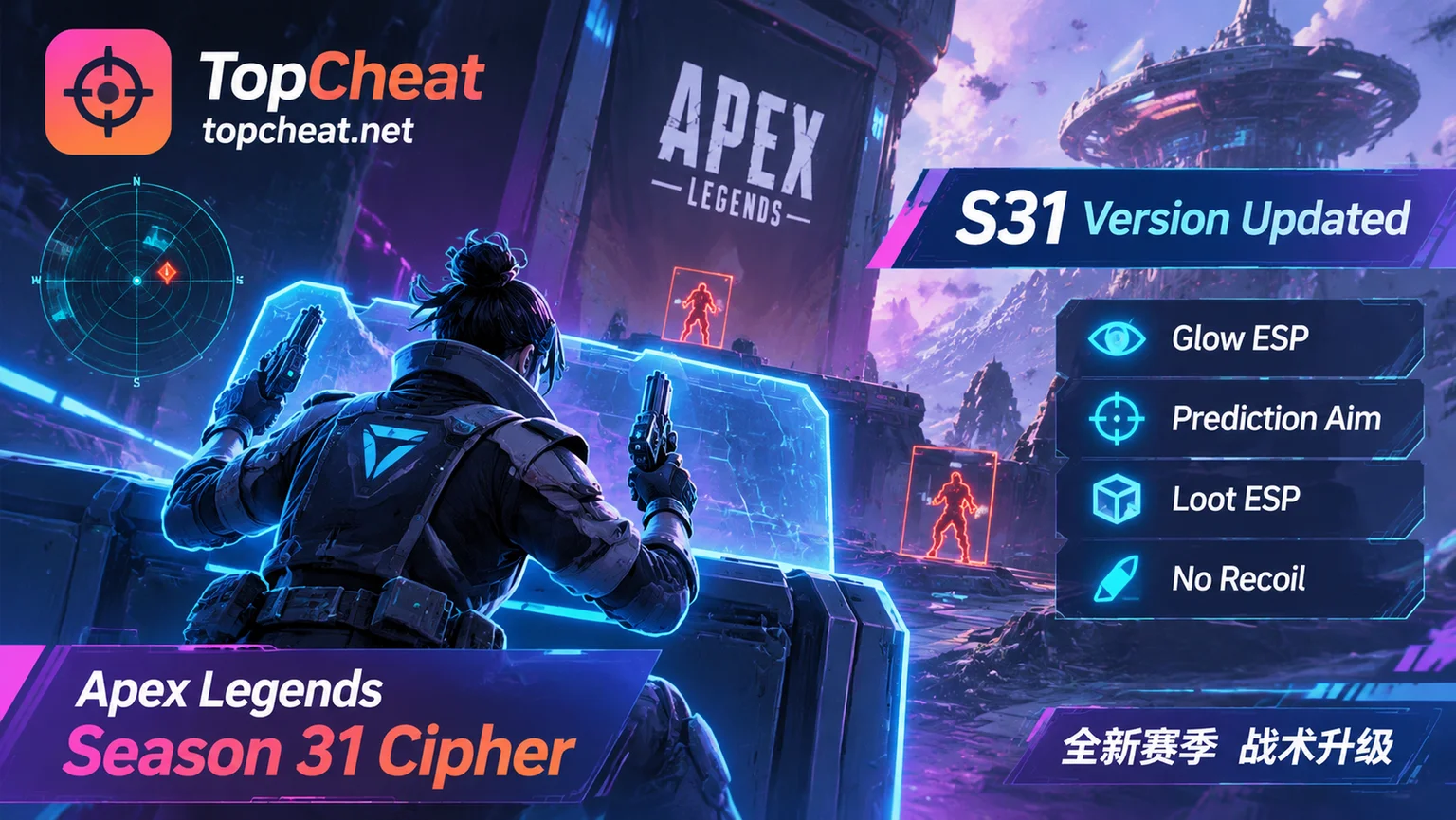
TopCheat's official Apex Legends product page lists four modules, roughly divided as follows:
- Glow ESP—solves the information problem: where people are and whether a third party is about to enter through walls;
- Prediction aimbot—solves mid-to-long-range hit problems, i.e., the lead calculation described above;
- Loot ESP—for filtering gear during the landing phase and rotations;
- No recoil—suppresses muzzle displacement during automatic fire, working with prediction to reduce stacking errors.
For feature details, currently supported environments, and maintenance status, please refer to the instructions on the Apex Legends cheat product page. Don't apply descriptions from other game pages or old articles.
Things to Verify Before Ordering
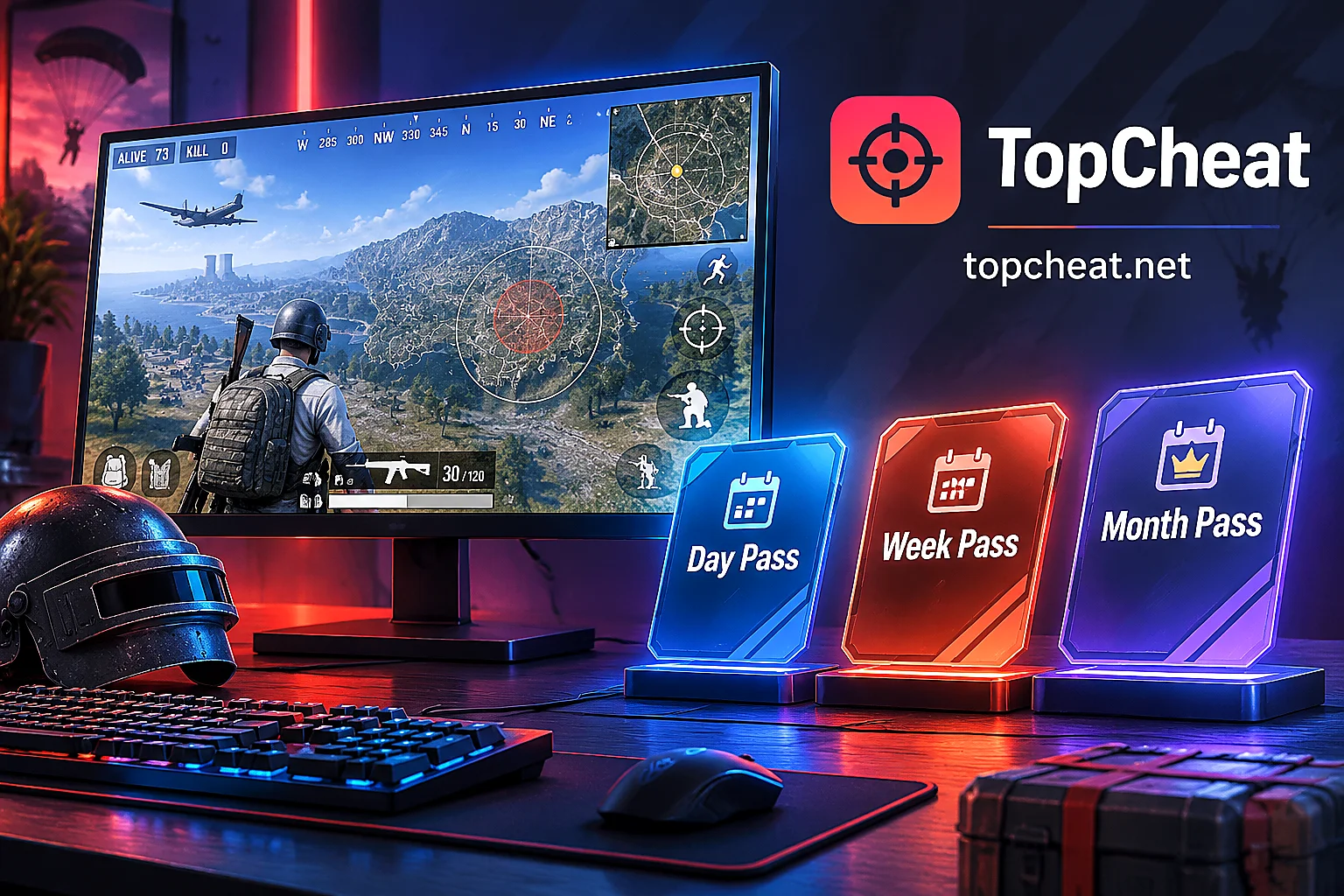
Keys are divided by game. TopCheat offers daily, weekly, and monthly keys, but the key scope, pricing, and device binding/unbinding rules are independent for each game—there's no cross-game universal key. The binding conditions you see on another game's page cannot be assumed to apply to Apex.
Check the current maintenance status first. After Apex season updates and hotfixes, feature availability can change; the real-time status on the product page is the basis for purchase.
Think about whether you really need prediction. If your fights mostly happen within 20 meters, prediction offers limited improvement, and the information advantage from ESP may be more practical. If you often use snipers and DMRs to trade and chase low-health targets, prediction is the module that determines whether damage lands.
Finally, a common misunderstanding: aimbot logic cannot be copied across games. Hitscan games' aimbots don't need to calculate travel time at all; feature names may be similar, but implementation requirements are completely different—this is clearer in the respective module descriptions in Valorant cheat feature breakdown and how to choose CS2 cheats.


Comments(0)